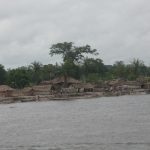
Why are there still isolated, unreached, overlooked, neglected and traumatized villages along the river banks and lake shores in the Democratic Republic of the Congo? Because those local and global Christians and churches who ought to be consistently obedient to the Great Commission of our Lord and Saviour, Jesus Christ of Nazareth, had progressively given up since the Greatest Centuries of Missions in the 19th and 20th centuries! There are also practical and spiritual challenges in the DR Congo (DRC): 1. Geographical difficulties of geography, terrain, climate, remote location and disease (albeit from test tubes or natural occurrence). 2. Both local tribal and international distrust after a history of plunder and trauma. 3. Greedy or difficult or carelessly approached tribal chiefs. 4. Areas of witch doctor control. 5. Persistent animism and even some (ritual) cannibalism in very remote areas. 6. Confusion after having been reached by other religions before. 7. Neglect by the indigenous DRC Christian churches. Neglect to reach out further and further, plant churches, train Pastors and mentoring supervision carried out consistently by nearest established Christian churches. 8. Apathy regarding Evangelism programs in the DRC. 9. Incessant poverty, disruption and turmoil in the DRC. 10. Rebel activity and conflicts that sustain the 24/7 export of cheap minerals (blood soaked rare earths). 11. Very bad roads and manipulation (closing) of airports at Kisangani, Goma and Bukavu. 12. Extraordinary logistics and forwarding difficulties in some instances, to get Gospel material and Bibles to places such as Kisangani, Goma and Bukavu. 13. The withdrawal of international churches, ministries and missions from the eastern DRC since the Simba Rebellion of 1959 – 1964. 14. Excessive administrative requirements related to invitations, letters and the expensive visas for the DRC. 15. The suppressed momentum for continual outreach and follow up, in the absence of large international mission organizations that can co-manage administration, sustain workers and improve logistics. 16. National territorial and tribal disputes that place international Christian outreach at risk. 17. The tendency of DRC authorities to expel international Christian effort and seizing assets or material. 18. Corruption in many spheres, levels, areas and positions of decision making. 19. The reluctance in the DRC to accept and implement advice that can develop cooperation, friendships and economic growth. 20. Poor local DRC Christian church members who cannot tithe and gift. Then the local churches cannot send out Evangelists or afford to receive international cooperation. Neither is there much economic opportunity to sustain Tentmaker Evangelists who are willing to go forth from the local churches in the DRC.
Regardless, Matthew 28:18-20, Acts 1:8 and Romans 10:9-15 do not quote any of the above in any small print, as reasons not to GO!